Brief / Record
Primary record
What a roof is not
The numbers on the other pages are the statute. These clips are the setting: an eight-person dorm while the RGI list runs in years, a hospital month priced at $30,000, a federal promise to lift people out of poverty that arrived as $204.20, $1.7 million in outside counsel to clear a tent after two Charter losses, and people who say they do not want to die but cannot afford to live. Social assistance that cannot rent a room is woefully inadequate. That is legislated destitution.
Housing First is cheaper because it is housing
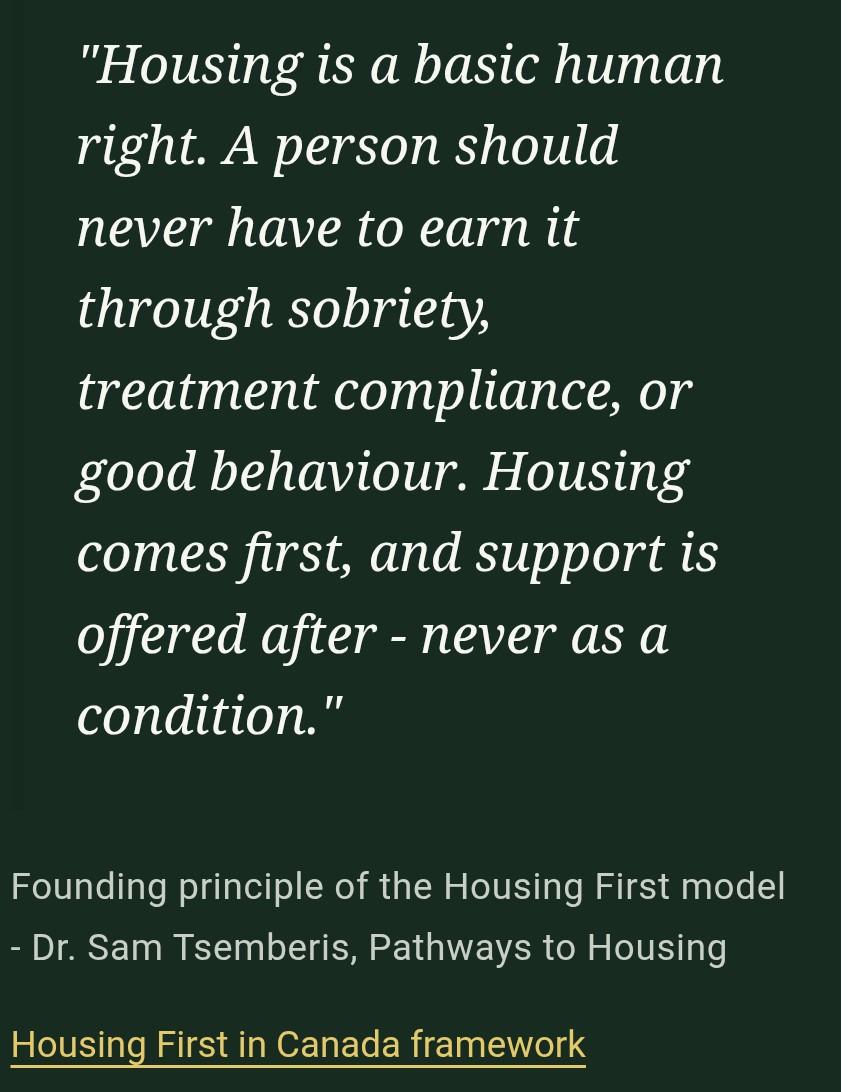
The clip is a rights argument with a ledger attached. People get housing because they are people. The system then discovers it was already spending more to keep them unhoused.
OW at $733 and ODSP at $1,436 are not “supports” in a city where a 1-bed is $1,985. They are the published mechanism that keeps people in the $6,000 shelter month and the $30,000 hospital month.
They litigated the tent instead of funding the key
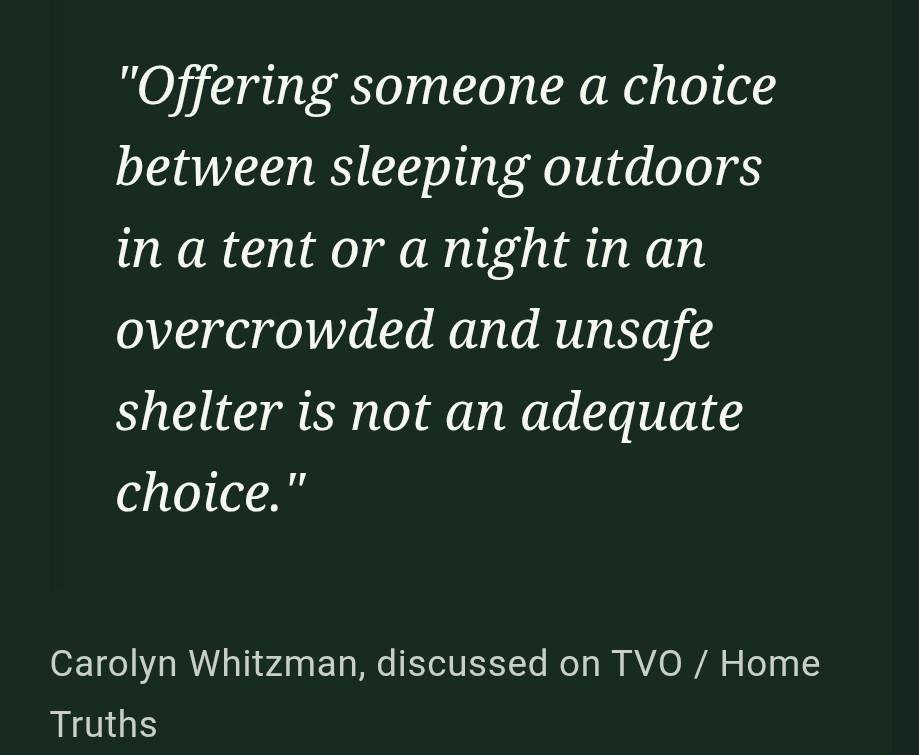
A housing crisis declaration that does not move the budget toward rent supplements and Housing First is a press release. Waterloo named a transit hub, hired a Toronto boutique firm, lost on Charter ss. 7 and 15, and appealed. Pennsylvania’s Shelter First bill at least says the quiet part: you do not punish someone for sleeping outside until you have offered them an indoor bed that is actually adequate.
Promise, then $204.20
C-22 was sold as the instrument that would end disability poverty. The Canada Disability Benefit maximum for July 2026–June 2027 is $204.20 a month. It requires a Disability Tax Credit. Ontario treats it as exempt income, which is the least it could do. Added to a full ODSP cheque and the usual credits, a single adult still sits under Toronto’s deep-poverty line.
That is not lifting anyone out of poverty. It is a press line with a two-hundred-dollar attachment. People with disabilities are disproportionately in core housing need, on the RGI list, and in the shelter count. A $204 top-up against a $1,985 rent is an insult published as a program.
When the safety net is the question
The clip is the logical end of a cheque that cannot rent a room. A person says they do not want to die. They cannot afford to live. The ministerial answer is coordination with provinces and a reminder that MAID is a court-protected right. Both can be true. Neither replaces an income at the Market Basket Measure, or a unit that exists this year.
A rights-based housing system does not leave medical assistance in dying as the visible alternative to a $733 or $1,436 month. That is shameful. It is legislated destitution with a clinical door.
Adequacy, as written
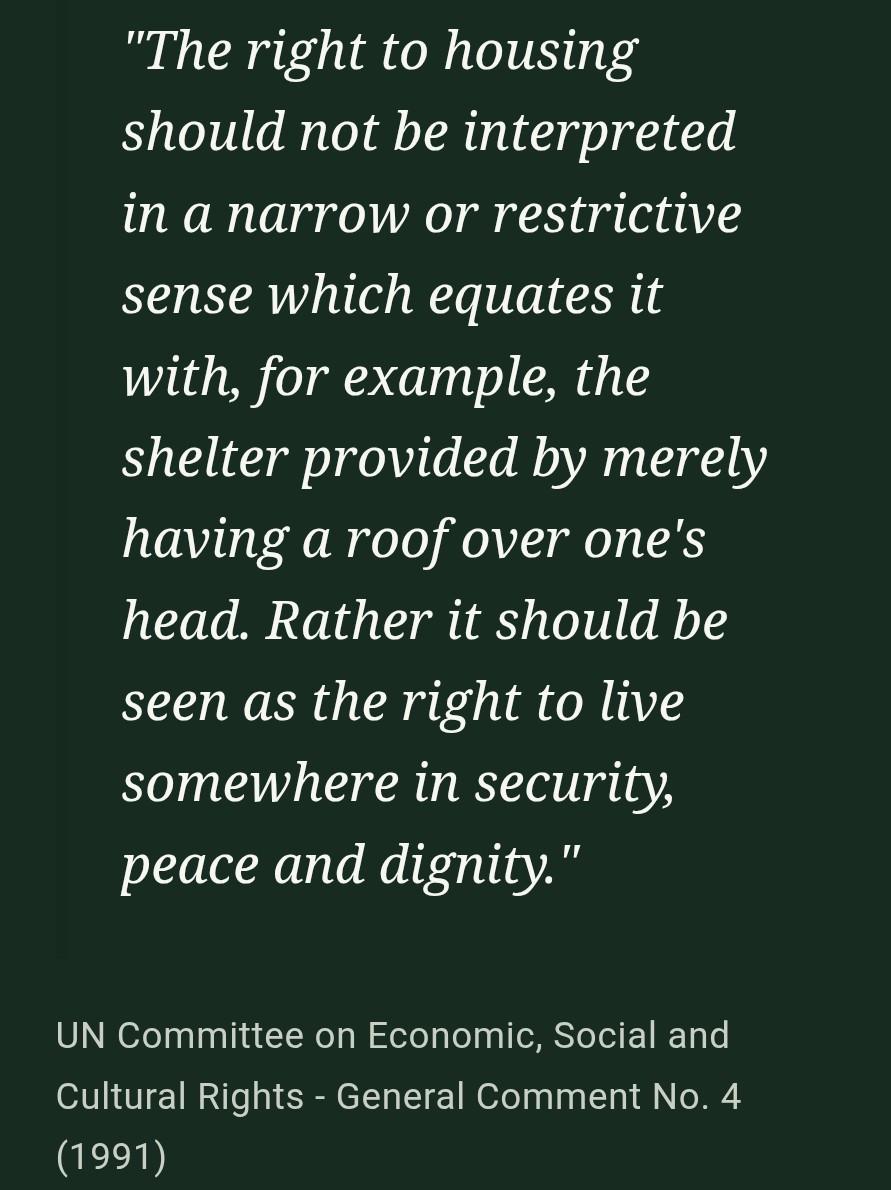
General Comment No. 4 lists the elements of adequacy: legal security of tenure; availability of services; affordability; habitability; accessibility; location; cultural adequacy. Affordability is defined so that housing costs do not threaten or compromise the occupants’ satisfaction of other basic needs.
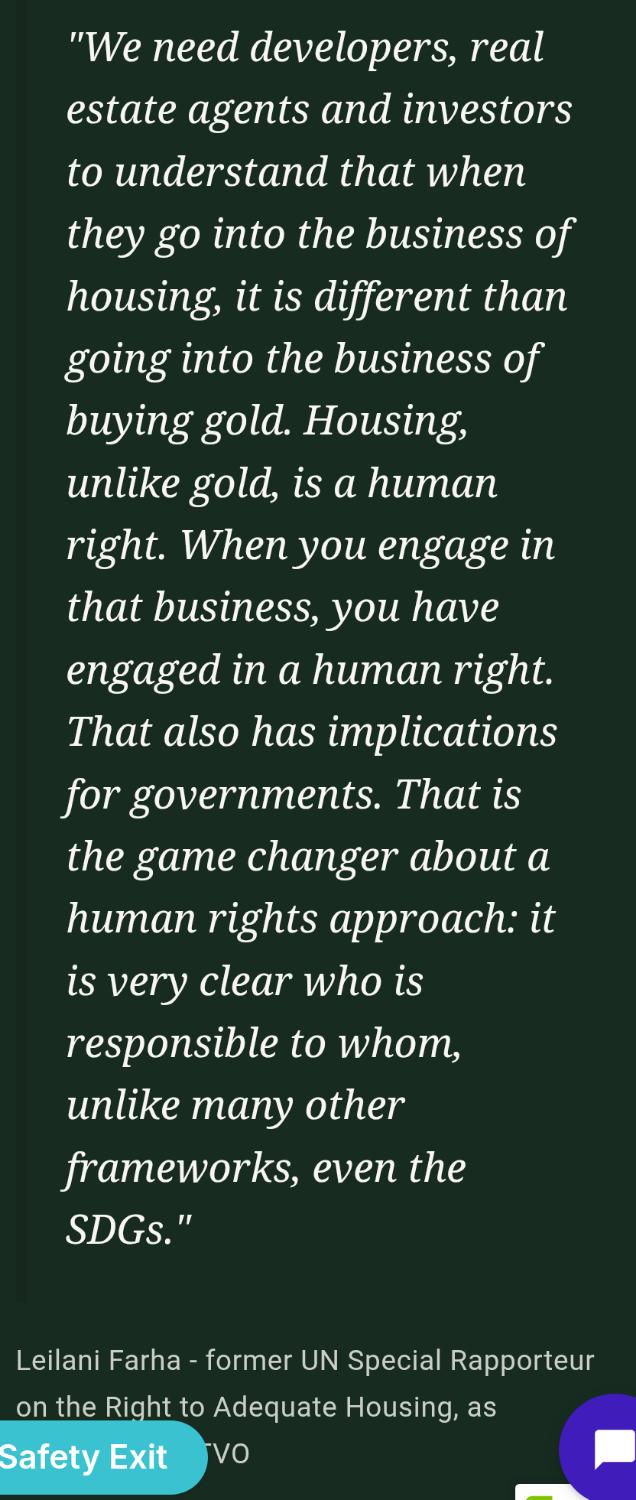
Farha’s point on TVO is the same test in plain language. Housing is central to health, education, water, sanitation — to being alive. People who are unhoused already know it is a right: surely I am not meant to live this life. Governments, developers and private-equity landlords treat it as gold. States signed the covenant. States are responsible to people. “Are we regulating that sector so it complies with the right? In Canada? No.”
An ODSP shelter line of $611 against a Toronto 1-bedroom average of $1,985 is the affordability test applied to a published cheque. A dormitory bunk is the habitability test applied to the overflow.
“Offering someone a choice between sleeping outdoors in a tent or a night in an overcrowded and unsafe shelter is not an adequate choice.” — Carolyn Whitzman, discussed on TVO.